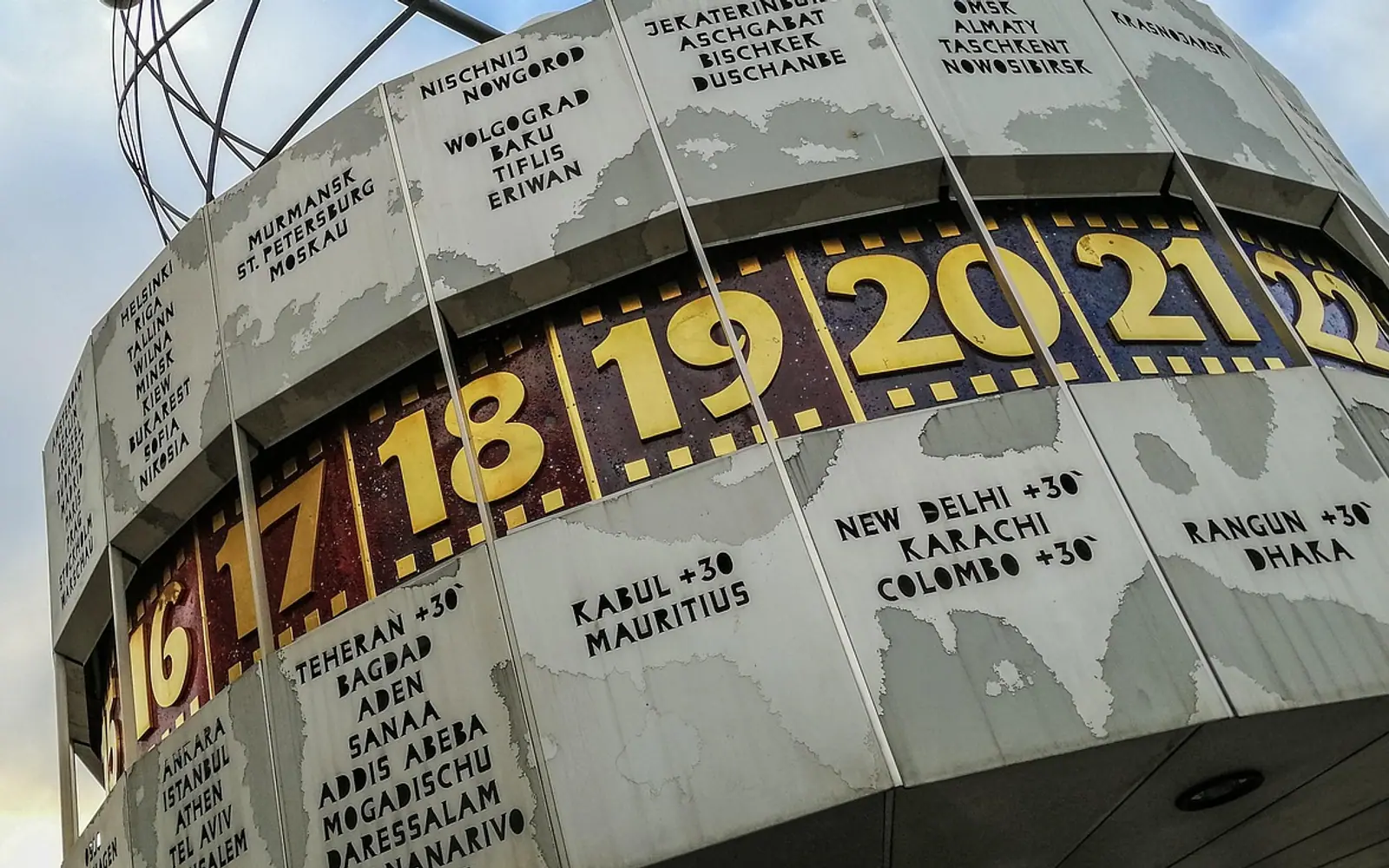
The foreign exchange market is open twenty-four hours a day from Sunday evening to Friday evening (New York time), because there is no single exchange: dealing simply follows the business day around the globe. Activity is not even across those hours, though. It builds as major financial centres open and fades as they close, and the busiest stretches come when two centres are working at the same time.
Knowing the rhythm of these sessions explains why spreads, price ranges and news reactions look so different at 3 a.m. and at 3 p.m. It does not tell anyone when to trade.
The four main sessions
Sessions are usually named after the city that dominates them. The hours below are approximate, are given in GMT, and shift by an hour when daylight saving changes in each region.
| Session | Rough hours (GMT) | Currencies most in focus |
|---|---|---|
| Sydney | 22:00 – 07:00 | Australian and New Zealand dollars |
| Tokyo | 00:00 – 09:00 | Japanese yen, plus Asia-Pacific currencies |
| London | 08:00 – 17:00 | Euro, British pound, Swiss franc |
| New York | 13:00 – 22:00 | US dollar, Canadian dollar |
Many sources describe the boundaries slightly differently, which is a reminder that sessions are conventions rather than official opening bells. Banks, funds and companies in each region simply become more or less active over the course of their working day.
Sydney
The week opens in the Pacific. Activity is usually light, and the Australian and New Zealand dollars attract most of the attention. Because few participants are active, prices can react sharply to weekend news when dealing resumes.
Tokyo
The Asian session adds the yen and regional business flows. Japanese importers and exporters, along with regional banks, are major users of the market during these hours, and Japanese economic releases tend to appear here.
London
London is the largest currency dealing centre, and its opening hours usually bring a clear pick-up in activity across the board, not only in European currencies. Many price ranges for the day are set during the European morning.
New York
The North American session brings US data releases, which often arrive early in the New York morning, and later the close of the trading week on Friday afternoon. Activity tends to fade through the New York afternoon once European desks have gone home.
Why overlaps matter
When two sessions are open together, more banks and companies are dealing at once. That generally means more liquidity: more buyers and sellers at each price. Two overlaps get the most attention:
- London and New York, roughly 13:00 to 17:00 GMT, often the most active window of the day;
- Tokyo and London, a briefer overlap in the European early morning.
Higher liquidity usually goes hand in hand with narrower spreads and smoother pricing. Quieter hours — late in the New York afternoon, or the gap before Tokyo is fully awake — can bring wider bid-ask spreads and more erratic fills.
Is there a best time to trade forex?
The question comes up constantly, and there is no universal answer. Busy periods offer tighter pricing but also faster moves; quiet periods are calmer but costlier to deal in and more prone to sudden jumps when news lands. Which conditions suit a person depends on the currencies involved, their time zone and whether they should be trading at all.
A more useful question is: what conditions should I expect at this hour? A pair made up of two currencies whose home markets are both closed will normally be thin. A pair whose home market has just opened, or whose country is about to publish important data, will normally be busier. The economic calendar is the tool for spotting the second case in advance.
Weekends, holidays and gaps
Dealing slows sharply on Friday evening and resumes on Sunday evening. News that breaks over the weekend cannot be traded until the market reopens, so the first price on Sunday can be noticeably different from Friday's close. This jump is called a gap.
Public holidays in a major centre have a similar thinning effect. A holiday in the US or the UK can leave the market quieter than usual for the whole day, with the occasional sharp move on light volume. Orders placed before such periods can be filled well away from the expected price, a risk explained in the guide to slippage in trading.
Daylight saving: the twice-yearly mismatch
Europe, North America and Australia change their clocks on different dates, and Japan does not change them at all. For a few weeks each spring and autumn, session overlaps are an hour longer or shorter than usual. Anyone who follows the market from a fixed time zone should check local opening hours around those dates instead of relying on a memorised timetable.
Quick reference
- The market runs from Sunday evening to Friday evening, New York time.
- Sydney and Tokyo open the day; London and New York carry most of the volume.
- Overlaps tend to be the busiest, best-priced periods.
- Quiet hours, holidays and weekend reopenings can bring wide spreads and gaps.
- Session times move with daylight saving.
General information about how the currency market is organised. It is not a suggestion to trade at any particular time; currency trading carries a substantial risk of loss, and independent professional advice is worth seeking first.
Questions? Write to us.
We read every message.
Across the sections
Tech
- Create Professional-Looking SVG Graphics With Online Editing Tools
- Editing Ready: Why and How to Convert MP3 to WAV Without Myths
- From First Call to Month Six: What a High-Performing SEO Agency Engagement Looks Like
- Beyond Activation: How to Maintain, Upgrade, and Make the Most of a Free Government Phone Over Time
Business
- What to Include in a Window Cleaning Brief for a Vienna Building
- Stand Out and Sell More: Creative Ways Digital Displays Elevate Your Brand
- Turning a Citation into Opportunity: The Value a Traffic Lawyer Brings to the Road
- Dental Partnership Agreements: Why You Should Never Sign Without a Dental Lawyer