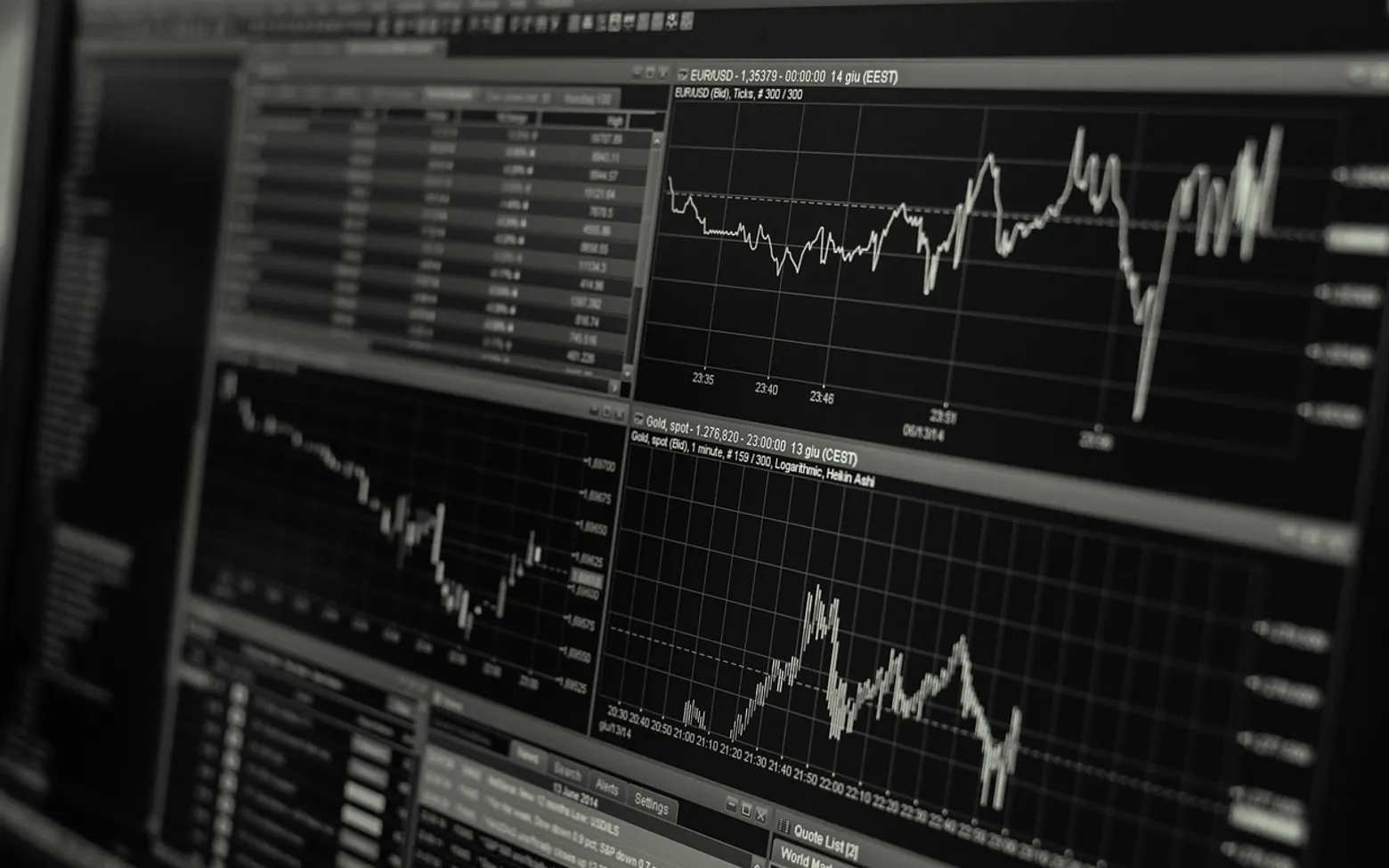
A currency quote on a news ticker or broker screen looks like a jumble of letters and decimals: EUR/USD 1.0842/1.0844. Every part of it has a precise meaning, though, and once the pieces are clear the rest of foreign exchange becomes much easier to follow. This explainer is purely educational; the figures used are illustrations, not real or current prices.
Three-letter codes
Currencies are identified by standard three-letter codes. The first two letters usually refer to the country or area, the third to the currency itself: USD for the US dollar, GBP for the British pound, JPY for the Japanese yen, CHF for the Swiss franc. The euro, shared by many countries, is EUR.
Base and quote currency
A pair always names two currencies. The first is the base currency; the second is the quote currency. The price tells you how many units of the quote currency are needed to buy one unit of the base. If EUR/USD stands at 1.0850, one euro costs 1.0850 US dollars.
When the number rises, the base currency has strengthened against the quote currency. When it falls, the base has weakened. Turning the pair around (USD/EUR) simply gives the reciprocal, which is why markets settle on one conventional order for each pair.
Bid and ask
Dealers show two prices rather than one:
- the bid is the price at which the dealer will buy the base currency from you;
- the ask (or offer) is the price at which the dealer will sell the base currency to you.
The ask is always slightly higher than the bid. In the example above, 1.0842 is the bid and 1.0844 the ask.
The spread
The gap between bid and ask is the spread. It is one of the main ways dealers and brokers are paid, and it is a cost for anyone exchanging currency: buying at the ask and immediately selling at the bid would lose the spread. Spreads tend to be narrower for heavily traded pairs and can widen sharply around major news or when markets are quiet.
Pips and decimal places
Price changes are often measured in pips. For most pairs a pip is the fourth decimal place (0.0001); for pairs involving the Japanese yen it is usually the second (0.01). Many platforms show an extra, smaller digit called a fractional pip. A move from 1.0850 to 1.0870 is a rise of 20 pips.
Majors, minors and crosses
Pairs that include the US dollar and another widely traded currency are often called the majors. Pairs between two other major currencies, such as EUR/GBP, are known as crosses. Pairs involving currencies of smaller or emerging economies are sometimes called exotics and usually have wider spreads.
Why this matters
Reading a quote correctly is the first step to understanding travel money, international invoices or news about exchange rates. For anyone considering trading, it is also a reminder that costs begin before any price moves at all. Currency trading, especially with leverage, carries a high risk of loss; learning the vocabulary is a beginning, not a reason to start.
Questions? Write to us.
We read every message.
Across the sections
Tech
- Create Professional-Looking SVG Graphics With Online Editing Tools
- Editing Ready: Why and How to Convert MP3 to WAV Without Myths
- From First Call to Month Six: What a High-Performing SEO Agency Engagement Looks Like
- Beyond Activation: How to Maintain, Upgrade, and Make the Most of a Free Government Phone Over Time
Business
- What to Include in a Window Cleaning Brief for a Vienna Building
- Stand Out and Sell More: Creative Ways Digital Displays Elevate Your Brand
- Turning a Citation into Opportunity: The Value a Traffic Lawyer Brings to the Road
- Dental Partnership Agreements: Why You Should Never Sign Without a Dental Lawyer