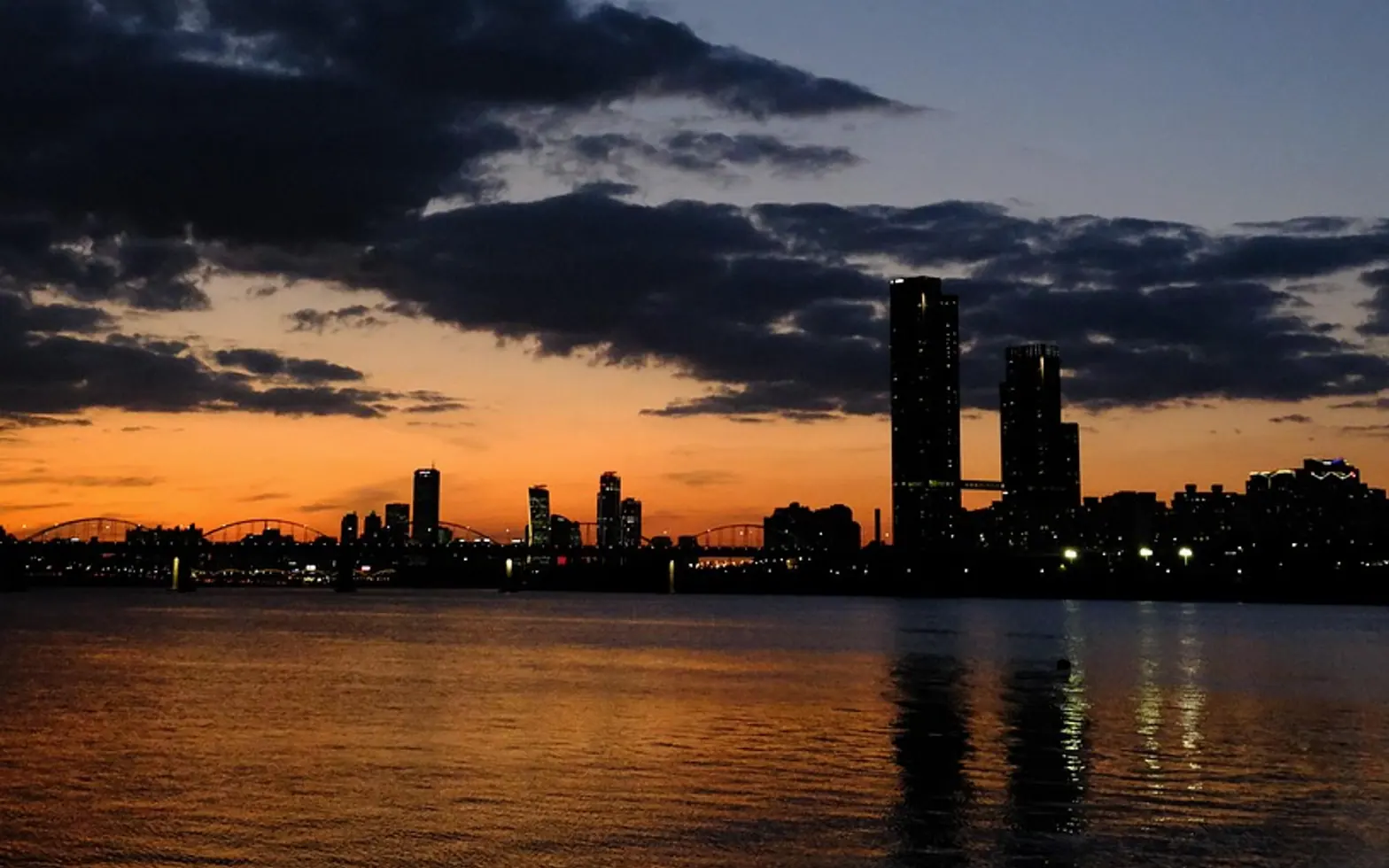
Gangnam became Seoul's business district through deliberate planning rather than slow, organic growth. As the old city north of the Han River grew crowded, the government pushed new housing, schools and transport links onto the farmland to the south. Offices followed the residents, a broad avenue called Teheran-ro filled with towers, and technology firms, retailers and restaurants clustered around them. The result is a district where corporate headquarters, startups, shopping streets and after-work dining all sit within a few subway stops of each other.
From fields to planned city
For most of Seoul's history, the city lived north of the river. The palaces, government offices, markets and older residential neighbourhoods were packed into the area inside and around the old city wall. The land on the southern bank was largely agricultural, dotted with villages and orchards.
That changed during the decades of rapid industrial growth, when people moved to the capital faster than the old districts could absorb them. Planners saw the open land south of the Han as the obvious place to expand. New bridges crossed the river, roads were laid out on a grid, and the area was redeveloped in large blocks rather than street by street. That top-down approach explains why Gangnam today looks so different from the winding lanes of the older city: wide avenues, long straight blocks and large apartment complexes are part of its original design.
Housing and schools moved the population
Building homes was only half of the task. Families needed reasons to move, and the most powerful one turned out to be education. Several well-regarded high schools were relocated from the old centre to the south, and private tutoring academies soon gathered around them. For many households, living near those schools became a priority, and apartment demand in the district rose with it.
Large residential complexes went up across the area, and they brought a stable, relatively affluent population. That population, in turn, made the district attractive to the businesses that serve them: banks, clinics, shops and restaurants. Once the residents and the services were in place, offices had good reasons to follow.
Teheran-ro: the office corridor
The clearest symbol of Gangnam's business role is Teheran-ro, a long avenue named in honour of a sister-city link with Tehran. Over time it became lined with glass office towers, bank branches and corporate headquarters. Its appeal for companies was practical:
- large plots suited to modern office buildings, which were hard to find in the old centre;
- direct subway access along the avenue, making commutes predictable for staff from across the city;
- proximity to the residential districts where many managers and professionals already lived;
- a growing pool of supporting firms, from law and accounting practices to printers and couriers.
Office districts tend to reinforce themselves. When enough companies share a location, clients, suppliers and job seekers start there by default, and every new tenant strengthens the case for the next one.
Startups and the tech cluster
From the internet boom onwards, the avenue also attracted young technology companies, earning it the nickname "Teheran Valley". Startups valued the same things larger firms did, plus the chance to be near investors, potential partners and experienced engineers. Co-working spaces, incubators and meeting venues filled the gaps between the towers, and the district became a natural meeting point for founders and the people who fund them.
The cluster also ties Gangnam into global markets. Companies dealing with overseas partners keep an eye on the hours when Asian, European and American markets overlap, a pattern explained in our guide to forex trading sessions and when the market is most active.
Retail and dining followed the offices
A business district needs places to spend the lunch break and the evening. Department stores, underground shopping arcades, a large convention and exhibition complex, and fashion streets grew around the office core. Restaurants of every price range opened to serve office workers at lunch and groups after work. Shopfronts compete for attention with bright signage and screens, a trend we looked at in our article on how digital displays strengthen a brand.
| Layer | What drove it | What it added to the district |
|---|---|---|
| Housing | Planned expansion south of the river | A large resident population |
| Schools | Relocated high schools and tutoring academies | Strong demand from families |
| Offices | Large plots and subway access on Teheran-ro | Headquarters and professional services |
| Technology | Investors, talent and shared spaces nearby | A startup cluster |
| Retail and dining | Daily spending by workers and residents | Shopping streets, restaurants and nightlife |
After-work culture grew with the business district
Korean office life has long included team dinners, known as hoesik, where colleagues eat together after work. In a district full of offices, that habit shaped the streets: barbecue restaurants, casual pubs and dessert cafés sit side by side, and a team evening often moves from one to the next. Where alcohol is part of the evening, the sensible rules apply: know your limits and never drive afterwards.
Karaoke is the other fixture. Noraebang, private singing rooms rented by the hour, are common across Seoul, and the office density of Gangnam means many are found there. Teams book a room to celebrate a launch or welcome a new colleague, and for visitors looking into how a group karaoke visit in the district works, the Karaoke of Gangnam Official site is one place to read up before going. The appeal is simple: a private room lets a group relax without performing for strangers.
Questions readers ask
Is Gangnam the only business district in Seoul?
No. The older centre north of the river remains home to government bodies and many large firms, and the island of Yeouido is closely linked with finance and broadcasting. Gangnam stands out for its mix of corporate offices, technology companies and consumer businesses in one area.
Why do companies still choose Gangnam?
Mostly because of everything that has built up around them: transport links, a deep talent pool, investors, service providers and plenty of places to meet clients. Once a location becomes the default address for an industry, that network keeps attracting new tenants, which is how a planned district on former farmland turned into the commercial heart of southern Seoul.
Questions? Write to us.
We read every message.
Across the sections
Tech
- Create Professional-Looking SVG Graphics With Online Editing Tools
- Editing Ready: Why and How to Convert MP3 to WAV Without Myths
- From First Call to Month Six: What a High-Performing SEO Agency Engagement Looks Like
- Beyond Activation: How to Maintain, Upgrade, and Make the Most of a Free Government Phone Over Time